Why Coworking Spaces Don’t Work

10 subjective arguments why a coworking space is not a good place to work.

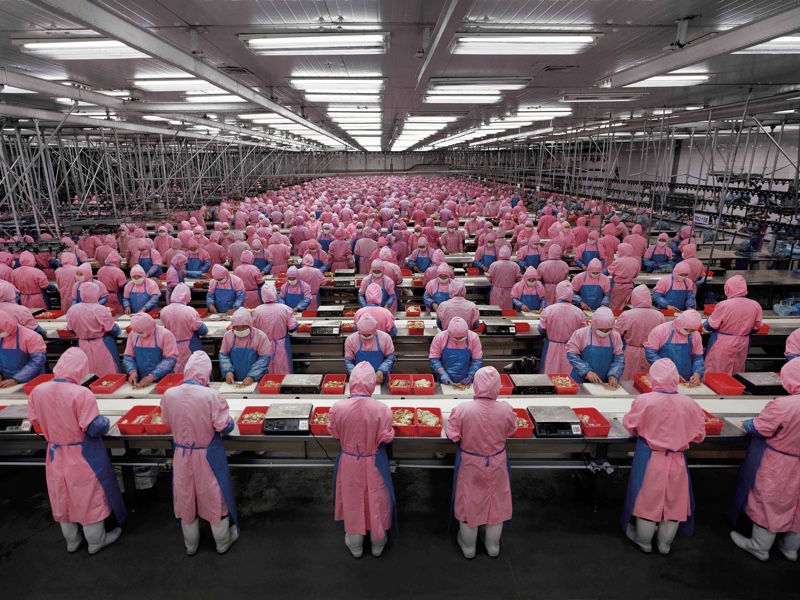
1. Chicken factory

I feel like a chicken in a chicken factory. Pure productivity. Robotic. Lacking human connection.

2. No going crazy

I can’t go crazy like I occasionally need to (singing, dancing wildly to the loud speakers on).

3. Rigid

I feel rigid-ized, meaning I need to sit in front of the computer and stay there as long as I work. I know I don’t have to but it feels I’m obliged to. A playground in the space would definitely help turning a coworking space into a playful working space.

Play (fun) + Work = Productivity would be the formula.

4. Too much computer (screen)

Starring at the screen because there’s nothing else or more interesting to see.

This is my general rantful argument because eventually I wanna lead a live away from the computer which will happen in the future. It could mean that I will lead and manage the content production process and art direction via voice control and minimal gesture-driven inputs while hired workers do that stuff. Workers can be human or can be automated processes.

So, when I say „away from the computer“ I’m referring 1) to a non-computer-driven environment or 2) an environment in which the computer is such an integrated system that it is not tangible or even visible.

After the post-PC era (initiated by tablets) we’re entering the PC-disappearance era as mentioned in the paragraph before.

5. Forced socializing

Coworking spaces allow that you can interact with people to maybe work together. As a (remote) worker you work on your own stuff and want to accomplish it. There’s no want or need to socialize with the people. You don’t really care who’s around you because you work result-driven. There are also too many people who want to do something with you.

6. Full of distraction

Coworking spaces is where a lot of people do a lot of stuff and distract you potentially every second of being there. You won’t find focus unless you remind yourself through reading Leo Babauta’s „Focus – A simplicity manifesto in the Age of Distraction“ (Free PDF to download).

7. No big content production

No space for big equipment unless you want to invest a lot. If your content production or commissioned-based work is equipment-heavy you will prefer to leave it in your home office and produce there not to invest absurd amounts of money for renting a whole room yourself. Also, you wouldn’t be able to control the noise around you.

8. Getting there

In an era where working remotely means being anywhere to be productive having to go to a coworking space sticks to the thinking that talent, creative collaboration and great things can only be found in certain hubs / cities / places / spaces. This is so far away from true as success stories like Basecamp or others show.

9. Paying for it

You have to pay for it although in every other café you can Wifi for free ordering a coffee or snack, and although it doesn’t provide that extra productivity environment. Exceptions prove the rules: Launch Pad in New Orleans, Louisiana, showed me that plugging your computer, connecting to Wifi and not paying a Dollar is possible. I worked 5 days there and Katy was a very nice person to talk to. She manages the space and community.

10. Lacking access to nature

Coworking spaces are normally not close to the green. You can find them in the CBDs of the cities or not too far from them. „Green“ Coworking Spaces, my wish for the future.


If you liked this article, please share it, so other people read it as well. Or drop me an email. I would like to see your opinion on that.

You can find more recent impressions of my remote work and travel life on Twitter, Facebook and Instagram.

j j j

The Writing Cooperative

The Writing Cooperative Logo

About two weeks ago I encountered The Writing Cooperative. Surfing on a serendipity wave I must have subscribed to their publication on Medium.

What is The Writing Cooperative?

We do not simply publish articles about writing: we actively help each other write better here on Medium. We do that through our three features.

Source: From their newsletter / Medium post (like all following quotes)

The 3 features

Since I have no hands-on experience yet writing as part of the community, I’m quoting what they offer in detail.

Draft List

Short description: Drafts Needing to be Edited

The crown jewel of this community is our Draft List. Once you join our community and add your profile (learn more about how to do that, below) you can add your unpublished drafts and get valuable feedback and editing from our members. Whether you are looking for last minute spelling and grammar checks or want opinions on the flow and argument of your article, you will always walk away with a way to make your writing better.

Article Adoption Agency

Short description: Medium Posts in Need of a Publication

Just published a great Medium article, but don’t have a publication for it? Here is the place where we compile posts that are in need of a nice home. After you join the Cooperative you can add yours to the list or look for the newest addition for your own publication.

The Finished Product Archive

Short description: Collecting all issues of The Finished Product

The Finished Product is a monthly article that showcases our writers, their articles, and the quality writing workshopped in the Draft List from that month. Each month a member is featured in an interview.

What I like about The Writing Cooperative

With only a first peak into what they’re doing I like their agile, loose-community approach and being a curator / publisher (with Medium.com being the main publisher). I would like to see them emancipate from Medium.com and achieve keeping their community glued together and still build it up further.

As Coastery wants to make people write (not speaking of quality, quantity, etc.), I see joining The Writing Cooperative a good second step after finding the right motivation to write through Coastery.

Take-away

The Writing Cooperative is a Medium.com-specific community of people who help each other write better. It’s little for now but has potential. On exciting updates, mayor improvements or steps forward I’ll keep you informed about it.

j j j

Making people write_

We started Coastery, a company that makes people write. We want to share how it was born.

There’s No Right Time

Sometimes it just comes in an unexpected moment but you know you have to start it right now. No waiting time, no more preparation. Just execute, as some people in the inter-webs like to say.

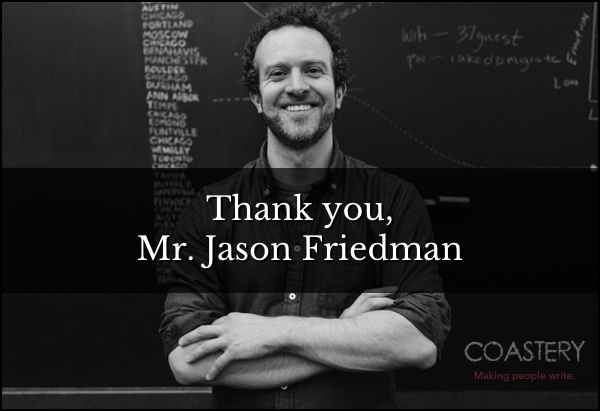
Or read the right message at the right time, like I did when I saw Jason Friedman’s tweet. Thank you for that!

Thank you Mr. Jason Friedman

His tweet gave the final push for us to go online.

An unknown, pretty wise man said:

Remember…
Whoever comes are the right people.
Whatever happens is the only thing that could have.
Whenever it starts is the right time.
When it’s over, it’s over.

So, Coastery is now online, not state-of-the-art but something to get us started in our journey.

Motivating people to write

Coastery is a space motivating people to write — through interactions, interviews and tools. We don’t care where and what you write as long as you write.

Not only since Julia Cameron introduced morning pages to a wide audience in her book “The Artist’s Way”, do we know that writing has a big effect on your mental space, your health and capacity to think. You become more productive and focus better.

Coastery. Making people write_

Easy tagline. Expressing a doer mentality.

In fact, only taking the time to write serves as a perfect companion to a morning meditation or in the evening or whenever you feel your world is “collapsing” on you.

In our childhood we wrote diaries or journals. It’s time to review and re-apply what was good for us when we were young. Because it won’t harm us, it will only give us a better understanding of ourselves. And yes, you may enter very dark corners of your inner spiritual world. Let it happen. It’s important for you whole overall well-being.

One text, five versions — our start

As said above, Jason Friedman’s tweet (about a writing class he would like to lead) made us start putting Coastery online. So, the writing class structure he refers to there goes like this:

In every writing assignment you hand in five versions: 3 pages, 1 page, 3 paragraphs, 1 paragraph, 1 sentence.

I don’t care about the topic. I care about the editing. I care about the constant refinement and compression. I care about taking three pages and turning it one page. Then from one page into three paragraphs. Then from three paragraphs into one paragraph. And finally, from one paragraph into one perfectly distilled sentence.

Write five versions

Since Coastery is about making people write we put Friedman’s idea into a hands-on exercise which everyone can participate.

Coastery Writing Class 1

Writing Class: Five versions (open in Google Docs)

Writing Class: Five versions (open in Google Docs)
Although he ignored my message (reply to his tweet) that we would like to execute it, we just did it.

People can request access to our shared Google Document (invitation only) and start writing. However, you will need to be logged in into your Google account to make a request.

Feel free to try, write and practice as much as you want. Invite your friends and share it with all people who need that motivation to write or inspiration to move forward in their writing.

We’re happy to get your feedback if you like or don’t like particular things. Write us: info@coastery.com.


If you liked this article, share the article on Twitter or your preferred network, so other people read it as well.

This post is written by Alexander Kluge, Founder of Coastery. He is creating Coastery as a unique writer’s space with only one objective: Making people write_

j j j